

One of the most common and understandable questions clients ask at the outset of any legal matter is: “How much is this going to cost?” We recognize that legal services represent an important investment, and we believe you deserve clear, straightforward information about how our billing works. Our goal is to ensure that you feel informed, confident, and supported from the very beginning of our engagement.
This overview explains the billing structures our firm uses and how we work to provide transparency throughout your matter.
What is a Retainer?
Our firm, as well as many other firms, requires a retainer. A retainer (also known as an initial deposit) is an upfront deposit paid by a client at the beginning of representation, like a security deposit. It is not an additional fee; rather, it is an advance payment that the attorney draws from as work is performed. The retainer ensures that funds are available to cover legal fees and certain case-related expenses.
The retainer is considered the client’s money until the attorney completes work on the case. As work is completed, fees are deducted from the retainer balance. The retainer amount must be maintained throughout the case.
During the consultation process, the attorney assesses your case and provides the retainer/ initial deposit amount.
Billing Structures We Use
Once you pay the retainer/initial deposit, the attorney will start work on your case. Different legal matters require different approaches. To ensure fairness and flexibility, our firm utilizes several billing models depending on the nature and complexity of the work.
How does hourly billing work?
Some legal matters, especially those with changing circumstances or uncertain timelines, are billed on an hourly basis. You are charged only for the actual time spent working on your case.
What types of work are billed hourly?
Hourly billing may apply to tasks such as:
- Legal research and analysis
- Drafting or reviewing documents
- Court preparation and appearances
- Negotiations and communications
- Client meetings and consultations
How is time tracked?
Time is recorded in precise increments to ensure accuracy and fairness. Each invoice includes detailed descriptions of the work performed. Our firm uses a 6-minute billing system, also known as billing in tenths of an hour. This is a standard method in the legal industry for tracking and charging time in small, consistent increments. One hour is divided into 10 equal increments, each lasting six minutes. Each increment represents 0.1 hours on your invoice.
This means:
- 6 minutes = 0.1 hours
- 12 minutes = 0.2 hours
- 18 minutes = 0.3 hours, and so on
Any task performed during your representation—no matter how brief—is rounded to the nearest 6-minute increment.
Will I receive cost updates?
Yes. We provide estimates at the outset and ongoing updates as your matter progresses so you can make informed decisions.
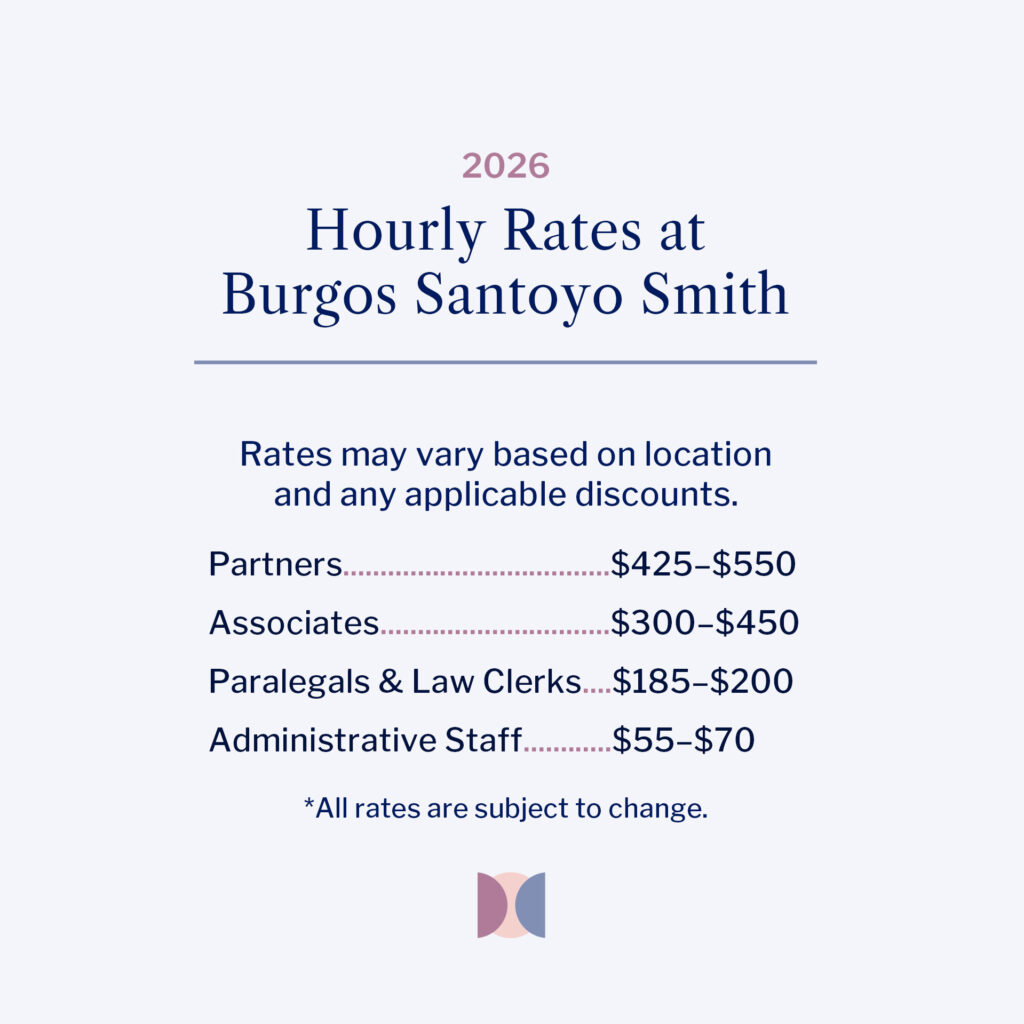
What are the hourly rates for at Burgos Santoyo Smith?
Rates may vary based on location and any applicable discounts.
Discounts
We offer reduced rates for:
- Union workers
- Active-duty military personnel
- First Responders
*All rates are subject to change.
What are flat-fee services?
A flat-fee arrangement provides a single, predetermined cost for a specific legal service. This option is available when the scope of work is clearly defined.
What types of matters qualify for flat-fee pricing?
Examples include:
- Standard document preparation
- Uncontested matters
- Routine filings or administrative tasks
- Mediation
What are the benefits of a flat fee?
Flat-fee pricing offers predictability and allows you to know the total cost in advance, making budgeting easier.
How much are flat fees?
The consultation attorney will provide you with the exact number for your case. However, the flat fee can range from $1000 to $30,000 depending on the scope of the work.
What other costs go into a case?
No attorney can guarantee the total cost of a case because every matter has unique needs and complexities. Generally, the more cooperative the parties are, the lower the overall expenses tend to be.
Legal fees include more than attorney hourly rates. Clients should also anticipate additional costs such as:
- Court filing fees
- Electronic filing fees
- Process server fees
- Court reporter and transcript costs
- Private mediator or private judge fees
- Expert witness fees, which may include business evaluators, real estate appraisers, and forensic accountants
- Travel Costs
- Document Copy Costs
These expenses vary depending on the nature of the case and the services required.
We explain these costs in advance whenever possible and are always available to discuss any item on your invoice.
Ongoing Communication and Cost Management
We believe that informed clients make empowered decisions. Throughout your matter, we provide regular updates regarding:
- Work completed
- Upcoming tasks
- Expected costs moving forward
If circumstances change or additional work becomes necessary, we discuss those developments with you promptly so you can make informed choices about how to proceed.
Our Commitment to YOU upon retaining
Our firm is dedicated to providing legal services with integrity, professionalism, and transparency. When you ask, “How much is this going to cost?”, you deserve a clear and honest answer. We are committed to ensuring that you understand your financial obligations and feel confident in the value of the services we provide.
If you have questions about our billing practices or would like to discuss your specific matter, we welcome the opportunity to speak with you.